Sep 17, 2026
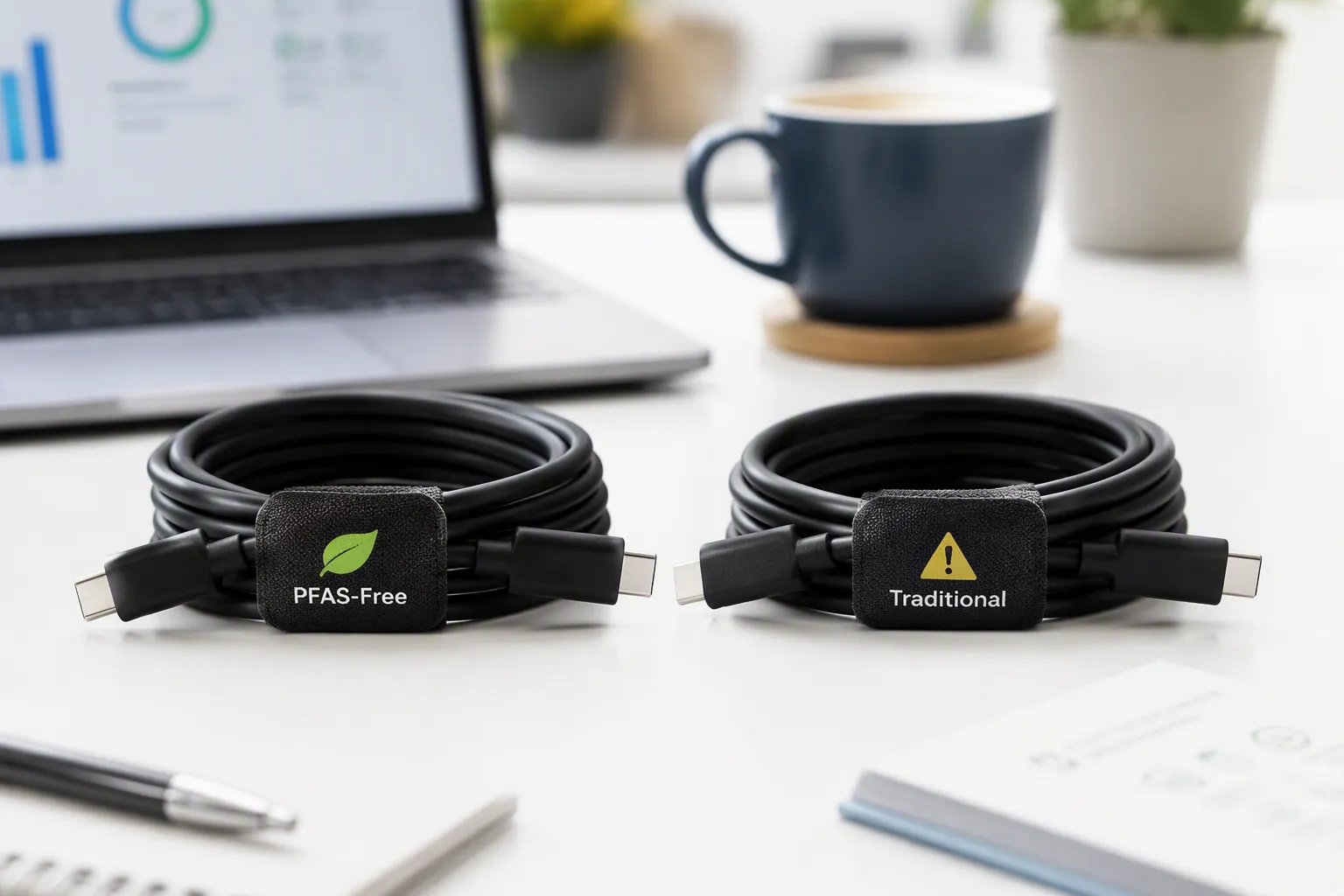
PFAS Free Cable is manufactured without per- and polyfluoroalkyl substances, while traditional cable may contain them; the right choice depends on your priorities regarding health, environment, performance, and cost. This topic matters now because PFAS chemicals appear in countless everyday products, and regulators worldwide are paying closer attention to their use. Growing awareness has pushed manufacturers and buyers to reconsider what goes into cable insulation, jacketing, and connectors. This article answers three guiding questions: What are PFAS? How do the two cable types differ? Which one is right for you?
Key Takeaways
PFAS are 'forever chemicals' used in traditional cables for heat resistance and flame retardancy.
PFAS exposure links to serious health risks, including cancer and immune system damage.
PFAS-free cables match traditional performance in heat resistance, durability, and design.
Regulations are pushing the market toward PFAS-free cables, with certifications like UL 746G.
Choose PFAS-free cables to protect health, environment, and avoid future regulatory costs.
What Are PFAS and Why Are They in Cables?
Defining PFAS and Their Common Uses
Perfluoroalkyl and polyfluoroalkyl substances (PFAS) are a class of man-made chemicals with a fully or partially fluorinated carbon chain attached to a functional group. They are highly stable and resistant to degradation. This stability earns them the nickname "forever chemicals."
PFAS are a broad class of synthetic chemicals prized in electronics for their thermal stability, chemical resistance, and dielectric strength. Common applications include wire and cable insulation.
These chemicals appear in many industries beyond cables. They show up in carpet, textile and leather production, chromium plating, photography, paper products manufacturing, semiconductor manufacturing, and coating additives. Consumer goods also contain PFAS, including food packaging, furnishings, waterproof clothing, and cosmetics.
The Role of PFAS in Traditional Cable Manufacturing
Traditional cable manufacturers historically used PFAS for several key properties. These substances offer excellent thermal resistance, with PFA withstanding temperatures from -200°C to 260°C. PTFE, another PFAS, maintains performance above 260°C. Such heat resistance suits environments with significant temperature fluctuations.
PFAS also provide outstanding chemical resistance. They resist acids, bases, solvents, and oils. This durability ensures cable performance in harsh chemical environments. High dielectric strength is another critical property. It helps maintain signal integrity and prevent electrical breakdown. PFAS are also non-flammable, with excellent flame resistance and low smoke generation. They resist UV radiation and environmental aging for outdoor reliability. Moisture resistance keeps insulating properties intact in humid conditions.
Traditional cables may use PFAS in insulation, jacketing, or connectors. A PFAS-free cable avoids these substances entirely. Manufacturers now offer halogen-free cable options marked 0H, ZH, or "halogen free" as alternatives. These alternatives aim to match performance without persistent pollutants.
Health and Environmental Differences
Health Risks of PFAS Exposure
PFAS exposure carries serious health consequences. A mixture risk assessment of cumulative PFAS exposure found that up to 24% of European adolescents exceeded health-based guidance values, with a maximum Hazard Index of 5.8. PFOS and PFOA drove most of that risk. Researchers detected elevated immunotoxic risks even at exposure levels previously considered safe. This finding reveals a mismatch between regulatory thresholds and real-world health outcomes.
Epidemiological studies link PFAS to harm across multiple body systems. The table below summarizes the key associations.
Health Domain
Epidemiological Association with PFAS
Hormone disruption
Altered thyroid hormones (T3, T4, TSH), especially in women and adolescents; increased thyroid cancer risk; clinical hypothyroidism
Immune system effects
Decreased antibody response after vaccination (approx. 5% reduction per doubling of PFOA); increased infection susceptibility; inflammatory bowel disease
Cancer
Probable link to kidney and testicular cancer; PFOA classified Group 1, PFOS Group 2B; up to 33% higher incidence of certain cancers in contaminated communities
The International Agency for Research on Cancer classified PFOA as Group 1 (carcinogenic to humans) in 2023. A case-cohort study within the Dongfeng-Tongji cohort found that a mixture of four perfluorinated carboxylic acids was associated with a 19% increased incidence risk of breast cancer. An occupational study of 462 male workers exposed to PFOA and PFOS found increased mortality from liver cancer (SMR 2.32). Cumulative exposure matters because these chemicals build up in the body over time.
Environmental Persistence and Lifecycle Concerns
PFAS do not break down easily. They contaminate soil and water for decades. This persistence creates lifecycle problems that extend far beyond the cable's service life. Disposal and recycling become complicated when persistent pollutants enter the waste stream.
PFAS-free cable options avoid these pollutants entirely. Halogen-free cables marked 0H, ZH, or "halogen free" offer the lowest ecotoxicity and superior fire safety. CITCABLE supplies 0H cable solutions that meet these environmental standards. Buyers who prioritize sustainability should look for these markings when specifying cable for their projects.
PFAS Free Cable vs Traditional Cable: Performance
Heat Resistance and Durability
PFAS Free Cable delivers exceptional thermal performance without relying on persistent chemicals. Consider the Coroflex High Voltage Cable as a concrete example. This cable achieves temperature classes up to 180°C and voltage ratings up to 1,500V DC. Its talc-free, PFAS-free design makes it suitable for automated manufacturing environments. Engineers no longer need to sacrifice heat resistance when choosing a PFAS-free option. Modern cable engineering has closed that gap entirely. These cables withstand the same demanding thermal conditions as their traditional counterparts. The difference lies solely in the chemical composition, not the functional performance. Durability testing confirms that PFAS-free materials maintain structural integrity under repeated thermal cycling. They resist cracking, embrittlement, and insulation breakdown over extended service life. This performance parity means buyers can select PFAS Free Cable without compromising on the operational requirements their applications demand.
Design and Compatibility Advantages
Design innovation creates meaningful advantages for PFAS-free options. The Torque Free design eliminates the cable memory that plagues traditional right-hand or left-hand twisted cables. Cable memory causes cables to retain coil shape after installation, complicating routing and termination. These cables with Torque Free design lie flat and straight, simplifying installation in tight spaces. Automated manufacturing lines benefit significantly from this property. Robots and automated termination equipment handle torque-free cable more reliably, reducing downtime from jams and misrouting. Connector compatibility further eases adoption. These cables use connectors designed for compatibility with established PFAS-free cable types, including Leoni Dacar 037 and 462. This compatibility means manufacturers can transition to PFAS-free options without redesigning connector systems or retraining assembly staff. The design advantages extend beyond environmental benefits to tangible operational improvements that reduce labor costs and installation time.
Regulatory Status and Market Trends
How Regulations Are Shaping the Market
Regulatory pressure drives the cable industry toward PFAS-free materials. Governments in Europe and North America now propose restrictions under frameworks such as REACH and the Toxic Substances Control Act. These regulations target the entire PFAS lifecycle, from manufacturing through disposal. Cable manufacturers face rising compliance costs if they continue using traditional PFAS-containing compounds. The regulatory landscape shifts quickly, making proactive transition a strategic advantage rather than a mere compliance exercise.
UL Solutions provides services that accelerate this transition. The company evaluates fluorine and PFAS content in wire and cable compounds using UL 746G‑based certification. This approach identifies non‑fluorine and non‑PFAS materials for manufacturers.
UL Solutions evaluates fluorine and PFAS in wire and cable compounds using UL 746G‑based certification to identify non‑fluorine and non‑PFAS materials. This service helps manufacturers stay ahead of fast‑changing regulations, offers customers greater transparency, and supports the industry's move to safer, more sustainable materials.
The service package covers seven capabilities:
Chemical review and inventory to identify PFAS in materials and manufacturing
Regulatory awareness tracking standards across jurisdictions
Materials testing including UL E 2884
Compliance certification such as UL 746G
Alternative materials exploration for PFAS‑free transition
Supply chain transparency with stakeholders and regulators
Ongoing monitoring for environmental and health impact assessment
Additional programs like the Yellow Card™ Plastics Recognition and UL 2884 environmental claim validation accelerate verified PFAS‑free cable availability. These certification pathways give buyers confidence when specifying PFAS Free Cable for projects.
GRP cable tray systems support halogen‑free and PFAS‑free initiatives. These systems remain free of persistent pollutants and meet the highest environmental and sustainability requirements for cable management infrastructure.
The Future of PFAS-Free Cable Innovation
Market demand for PFAS-free alternatives continues growing. Major electronics manufacturers and automotive OEMs have published PFAS phase-out commitments. These commitments create pull-through demand reaching deep into the supply chain. Cable suppliers investing in PFAS-free development today position themselves as preferred vendors for tomorrow's procurement cycles.
Innovation in alternative materials accelerates. Polymer chemists develop compounds matching traditional PFAS thermal and chemical resistance without environmental persistence. Manufacturing processes evolve to handle these new materials at scale. The coming years bring expanded product portfolios, shorter lead times, and cost parity as production volumes increase. Buyers specifying PFAS Free Cable gain early advantages in regulatory compliance and supply chain reliability.
Cost Considerations: PFAS Free Cable vs Traditional
Upfront Pricing and Total Cost of Ownership
PFAS-free cables often carry a higher upfront price than traditional alternatives. Newer materials and specialized manufacturing processes drive this premium. Polymer compounds that replace PFAS require different extrusion techniques and tighter process controls. These factors raise production costs during the early adoption phase. Buyers comparing quotes should expect this gap to narrow as production volumes increase and more suppliers enter the market.
Total cost of ownership tells a more complete story. PFAS-free cables deliver comparable durability, so replacement cycles remain similar to traditional options. Regulatory compliance adds another layer of savings. Companies that avoid PFAS now sidestep future remediation costs, disposal fees, and potential fines under frameworks like REACH and the Toxic Substances Control Act. Environmental cleanup for PFAS contamination costs far more than any cable premium. A PFAS Free Cable purchase today prevents those liabilities tomorrow.
Supply Chain and Availability Factors
Supply chain maturity varies by region. PFAS-free options are expanding rapidly, yet some markets still face longer lead times or limited supplier networks. Traditional cables benefit from decades of established production capacity and global distribution. Buyers in regions with fewer PFAS-free suppliers may need to plan orders further ahead or qualify new vendors.
Availability improves each quarter. Major manufacturers now publish PFAS phase-out commitments, and certification programs like UL 746G help buyers identify verified products. CITCABLE supplies halogen-free cable solutions that meet these environmental standards. As demand grows, distributors add PFAS-free inventory to their catalogs. Buyers who establish supplier relationships early gain a practical advantage. They secure capacity before competitors and avoid the scramble that follows new regulatory deadlines.
Choosing the Right PFAS Free Cable for Your Needs
Matching Use Case to the Right Cable
Selection starts with application requirements. High-voltage environments demand cables with verified temperature ratings and dielectric strength. The Coroflex High Voltage Cable serves this category well with talc-free, PFAS-free construction built for automated manufacturing environments. It carries a 1,500V DC rating and a 180°C temperature class. These specifications match industrial and automotive traction applications where thermal stability matters. Automated manufacturing lines require predictable handling characteristics. Torque Free design eliminates cable memory. Robots and termination equipment handle torque-free cable reliably without jams or misrouting. Fire safety applications require halogen-free materials. These cables minimize smoke and toxic gas emission during combustion. Markings such as 0H, ZH, or "halogen free" indicate compliance with fire safety standards. Connector compatibility simplifies transitions to PFAS-free materials. Cable types such as Leoni Dacar 037 offer established connector ecosystems. Engineers can match these options to project specifications without retraining assembly staff or redesigning connector systems. Each use case has a PFAS-free option that meets its specific demands without sacrificing operational performance.
Weighing Budget, Values, and Long-Term Goals
Budget involves more than purchase price. PFAS-free cables carry higher upfront costs due to newer materials and specialized extrusion processes. Traditional cables benefit from decades of production scale and supply chain maturity. The total cost of ownership tells a fuller story. PFAS-free cables deliver similar service life. Replacement costs therefore match traditional options. Regulatory compliance costs favor PFAS-free cables. Companies that transition early avoid future disposal restrictions, remediation liabilities, and potential fines under frameworks such as REACH and the Toxic Substances Control Act. These avoided costs offset the upfront premium over time.
Values play an equally important role. Health-conscious buyers prioritize eliminating PFAS exposure from their supply chain and facilities. Environmentally focused organizations choose PFAS-free cables to prevent persistent chemical contamination in soil and water. Performance-driven buyers compare specifications carefully because modern PFAS-free cables meet or exceed traditional benchmarks. A simple framework guides the choice. If health and environmental impact rank as top priorities, choose PFAS Free Cable. If budget constraints are severe and current regulations allow traditional materials, traditional cables may still suffice. If performance requirements are critical, compare specifications side by side rather than assuming one category dominates. Each buyer weighs these factors differently based on their specific context. The right choice aligns the use case, financial situation, and organizational values into a coherent procurement decision.
CITCABLE supplies halogen-free cable solutions that align with these priorities. These verified PFAS-free options support buyers who make health and environment their primary concern while maintaining the performance required for demanding applications. Companies specifying PFAS Free Cable today position themselves ahead of regulatory deadlines while meeting operational requirements.
PFAS-free cables eliminate persistent chemicals from insulation, jacketing, and connectors, while traditional cables may still rely on them for heat resistance and flame retardancy. The right choice depends on the application, the budget, and the values a buyer or organization holds.
Readers who prioritize health and environmental responsibility will find strong reasons to choose PFAS-free options. Those with tight budgets and lenient regulations may still consider traditional cables. Performance-focused buyers should compare specifications directly. No single answer fits every situation. An informed decision, made with clear priorities, serves every buyer best.
FAQ
What exactly makes a cable PFAS-free?
A PFAS-free cable contains no per- and polyfluoroalkyl substances in its insulation, jacketing, or connectors. Manufacturers replace these chemicals with alternative polymer compounds. Certifications such as UL 746G help buyers verify that claim independently.
Do PFAS-free cables perform as well as traditional cables?
Yes. Modern PFAS-free cables match traditional thermal and electrical benchmarks. The Coroflex High Voltage Cable reaches 180°C temperature classes and 1,500V DC ratings. Torque Free designs also remove the cable memory that complicates routing and automated termination.
Are PFAS-free cables more expensive?
They often cost more upfront because newer materials require specialized extrusion processes. Total cost of ownership narrows that gap. Buyers avoid future remediation liabilities, disposal restrictions, and fines under frameworks such as REACH and the Toxic Substances Control Act.
How can a buyer identify a PFAS-free cable?
Buyers should look for halogen-free markings such as 0H, ZH, or "halogen free," which indicate the lowest ecotoxicity. Third-party certifications like UL 746G confirm non-fluorine content. Suppliers such as CITCABLE publish verified PFAS-free options for specifiers.
Which applications suit PFAS-free cables best?
High-voltage environments, automated manufacturing lines, and fire-safety-critical installations benefit most. These settings demand verified temperature ratings, predictable handling, and low smoke emission. PFAS-free cables meet those requirements without persistent pollutants entering the waste stream.
CZYTAJ WIĘCEJ


 Obsługiwana sieć IPv6